
Lyophilized Peptides Explained
A research-focused guide to understanding what lyophilized peptides are, why freeze-drying is used, and how dry peptide materials support stability, handling, and laboratory preparation in research environments.
What Are Lyophilized Peptides?
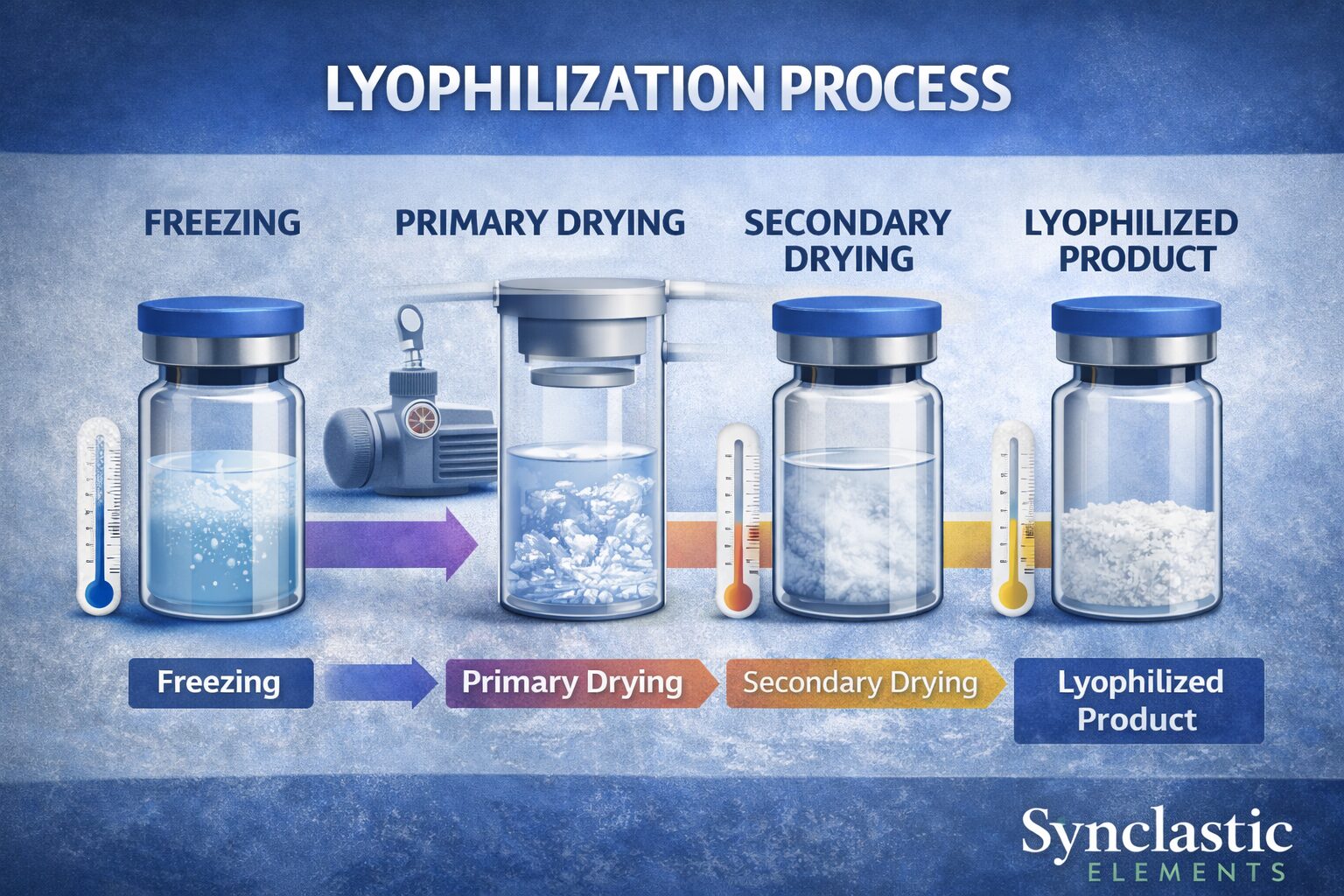
Lyophilized peptides are peptide materials that have undergone a freeze-drying process known as lyophilization. In this process, water is removed from the material under controlled temperature and pressure conditions, leaving behind a dry, stable powder-like form.
In laboratory research settings, lyophilization is commonly used because many peptide compounds are sensitive to moisture, temperature fluctuations, and prolonged exposure to liquid environments. Keeping a peptide in dry form can help support material stability during storage, transport, and later preparation.
What Is Lyophilization?
Lyophilization is a preservation method that removes water from a material by freezing it and then allowing the frozen water to transition directly from ice to vapor under vacuum conditions. This process is sometimes described as a form of controlled dehydration designed to preserve the structure of sensitive compounds.
Because peptides can be delicate at the molecular level, freeze-drying is often used to reduce the risk of degradation that may occur when a material remains dissolved in solution for extended periods.
Why Peptides Are Commonly Stored in Lyophilized Form
Many research peptides are stored in lyophilized form because dry storage can provide practical advantages for laboratory handling and long-term material management. A dry form may help reduce exposure to factors that can affect peptide integrity, including hydrolysis, microbial contamination, and chemical instability associated with solution-based storage.
Common Reasons for Lyophilized Storage
- Supports improved stability for sensitive peptide materials
- Reduces water-related degradation risk during storage
- Helps simplify transportation and inventory control
- Allows laboratories to prepare solutions as needed for documented workflows
- Provides flexibility for analytical and experimental preparation
How Lyophilized Peptides Appear
Lyophilized peptides are often seen as a dry cake, powder, or thin layer of material resting at the bottom of a vial. The appearance can vary depending on the peptide itself, the formulation process, and the amount of material present. Some preparations may look fluffy and porous, while others appear compact or glassy.
Visual appearance alone does not determine purity or identity, which is why analytical methods such as HPLC and LC-MS are important for laboratory verification.
Lyophilized Peptides vs. Liquid Peptide Solutions
Lyophilized Form
- Stored dry before preparation
- Often preferred for stability
- Prepared when needed for research workflows
- Useful for transport and longer-term storage planning
Solution Form
- Already in liquid state
- May require closer stability tracking
- More sensitive to storage duration and conditions
- Often used after a controlled preparation step
In educational terms, the main difference is that lyophilized peptides remain dry until a laboratory preparation step is performed, while solution-based materials are already suspended in liquid and may be more sensitive to time and storage variables.
Why Stability Matters in Research
Peptide stability is important because the physical and chemical condition of a material can influence the quality and consistency of research data. If a compound degrades, absorbs moisture, or experiences improper storage conditions, laboratory results may become less reliable or harder to reproduce.
For this reason, researchers often pay close attention to how peptide materials are stored, when they are prepared, and how they are documented throughout the research process.
General Handling Considerations for Lyophilized Materials
In laboratory settings, lyophilized materials are typically handled with care to avoid unnecessary exposure to moisture, heat, contamination, or repeated environmental stress. Controlled handling practices support clearer documentation and more consistent preparation outcomes.
Common Laboratory Considerations
- Store materials according to documented temperature guidance
- Limit unnecessary vial exposure to humidity
- Maintain clear labeling and lot tracking
- Use clean preparation practices in research environments
- Document preparation dates and storage conditions after reconstitution
How Lyophilized Peptides Relate to Reconstitution
Lyophilized peptides are often discussed together with reconstitution because the dry material may later be prepared into a solution for laboratory or analytical workflows. In research contexts, reconstitution refers to introducing a measured solvent volume into the dry material so that concentration and preparation details can be documented.
Understanding lyophilized peptides is therefore a foundational step toward understanding broader topics such as research preparation, solution concentration, and analytical handling.
Analytical Verification and Research Quality
Because physical appearance alone is not enough to confirm the identity or purity of a peptide, researchers often rely on analytical testing methods such as HPLC and LC-MS. These methods help laboratories evaluate purity profiles, verify molecular weight, and better understand the material being studied.

Educational Summary
Lyophilized peptides are freeze-dried peptide materials stored in a dry form to support stability and handling in research settings. The lyophilization process removes water under controlled conditions, helping preserve sensitive compounds before later preparation. In laboratory environments, understanding lyophilized peptides is important because it provides context for storage practices, preparation methods, concentration documentation, and analytical verification.
Research Use Notice
This page is provided solely for educational and informational purposes related to laboratory research practices. Any materials referenced are intended strictly for in-vitro research and analytical investigation. They are not intended for human consumption, medical use, or diagnostic application.
Continue Exploring Research Education
Build this page into your Synclastic Elements education hub by linking it with your storage guide, reconstitution guide, testing page, and calculator.
This content is restricted to site members. If you are an existing user, please log in. New users may register below.